
 English
 Español
 Français
 Deutsch

Walk into a room at dusk and switch on a small string of bulbs. The mood changes before you have moved a single chair. A LED String Light can calm a bedroom, outline a balcony, or turn a plain wall into a party backdrop. The color of the glow shapes that effect as much as the way the string is hung.
Warm white, cool white, and colorful strings each suit different habits. A string that feels cozy beside a bed can look dim in a craft corner. A crisp white line that flatters a metal railing may feel a little cold above a pillow. Matching the color to the way you live in the space saves you from taking the lights down a week later.
Why Does Light Color Change the Feel of a Space?
Warm white has a soft, golden tone, similar to an old filament bulb. It suits evenings when people want to unwind, read a few pages, or talk quietly. Cool white looks cleaner and closer to daylight, so it gives a fresher, more open impression. Colorful strings are playful. They draw attention to whatever they surround, whether that is a fence, a doorway, or a bare patch of wall.
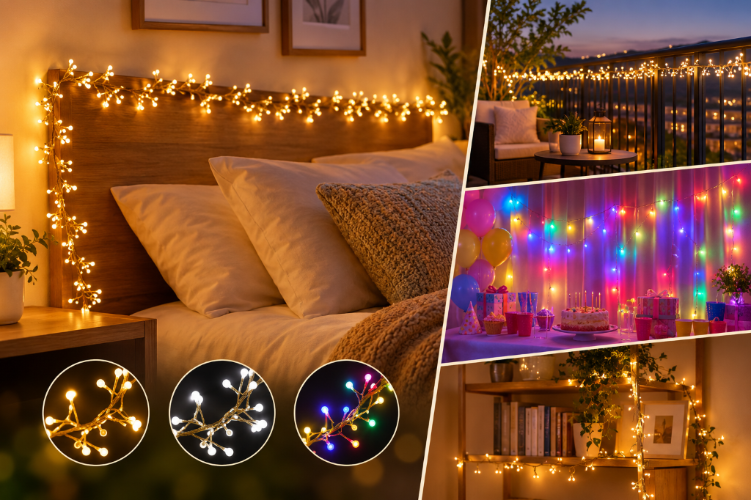
Surfaces matter too. Warm light settles into wood, linen, and woven baskets. Cool light stands out against dark metal, gray concrete, and glossy modern furniture. Colored bulbs read clearly on a plain background, but they can look busy once patterned curtains, posters, and cushions compete with them.
Look at the lighting already in the room before buying. A ceiling fixture, a bedside lamp, or a streetlight outside the window all affect how a string looks after dark. A decorative string works as an extra layer, so its color should sit comfortably beside the light that is already there.
| Setting or Decoration | Suitable Light Color | Design Effect |
|---|---|---|
| Bedroom with soft fabrics and wood | Warm white | Gentle, relaxed look |
| Balcony with modern furniture | Cool white | Clean lines and clear shapes |
| Balcony with plants and natural textures | Warm or cool white | Softer or fresher outdoor feel |
| Party with a color theme | Coordinated colorful lights | Ties lighting to decorations |
| Plain wall used as a photo backdrop | Colorful lights | Adds interest and a focal point |
| Small indoor gathering area | Warm white or restrained colors | Inviting without clutter |
These pairings are starting points, not rules. A modern bedroom can carry a small colorful accent, and a rustic balcony can look good in cool white. The question to ask is whether the color supports the mood you want.
Which Color Fits a Bedroom, a Balcony, or a Party?
Is Warm White Suitable for Bedrooms?
Warm white usually fits, since it sits comfortably with bedding, curtains, and cushions. Think of the string as an accent. Bulbs draped behind a headboard frame the bed, and a line along a bookshelf makes a few favorite objects stand out.
Placement matters as much as color. A bare bulb in your direct line of sight can glare when you lie down. Tucking the string behind a shelf edge, around a mirror frame, or above a sheer curtain spreads the glow and keeps it gentle. Anyone who reads in bed still needs a proper reading lamp, because decorative light is too faint for small print.
When Does Cool White Work Better on a Balcony?
Balconies do many jobs. They hold morning coffee, herb pots, drying racks, and a folding chair for the evening. Cool white suits a tidy, modern balcony, where it traces the railing, planters, and seating clearly. Against dark furniture or green leaves, it shows the shape of the space after sunset.
A balcony meant for quiet rest may feel warmer in warm white, especially with wicker or wooden pieces. Weather needs thought as well. Sun, rain, damp air, wind, and temperature swings wear on lighting over time. Check that the product is intended for outdoor conditions and follow the maker's instructions for installation. A string sold for indoor decoration should not be assumed safe for an exposed balcony. Keep cables off the doorway and away from the watering route, so nobody trips while carrying a pot.
Why Are Colorful Strings Popular for Parties?
Color gives a party a visual theme without much effort. A string of mixed bulbs along a fence, behind a dessert table, or above a seating area marks out where the gathering happens. Matching the colors to balloons, paper cups, or fabric makes the lighting look planned and not tossed in.
Using color in one spot often looks better than covering every wall. A single bright backdrop gives guests a place to take photos and leaves the rest of the room calm. People still need to see steps, chairs, and food, so add plain light near serving areas and walkways.
What Should Buyers and Manufacturers Consider?
What Should Buyers Check Before Purchase?
Think about where the string will hang. A bedroom string may need to fit around shelves and furniture. A balcony string needs construction suited to the outdoors. A party string should be easy to hang, take down, and pack away.
Power changes the layout. Some strings need a nearby socket, while others run on batteries, so decide where the source will sit and how the cable will run. Look over the bulbs, wire, connectors, and hanging points. Use the mounting method the maker recommends, and do not use a string with damaged wiring or loose parts. Also consider how it looks in daylight, since the cable color and bulb shape stay visible when the lights are off.
- Where will the power source sit?
- Will cables cross a walking path or a door?
- Does the product suit indoor or outdoor use?
- Can the string be moved easily for different occasions?
How Can Manufacturers Develop for Different Scenes?
Scene-based design starts with watching how customers use the lights. Bedroom versions may favor warm tones and neat, low-profile mounting. Balcony versions call for attention to weather suitability and secure fixing. Party versions can offer colorful effects that suit varied themes. One design may serve several settings if its construction and mounting are flexible, as long as the description states the intended uses plainly.
Color consistency deserves attention. Bulbs that look noticeably different within one string make the arrangement seem uneven. Checks on color appearance, light output, wiring, and assembly help the finished product match its product photos. Cable color, bulb shape, and hanging features form part of the product's look, so they should work together.
Clear descriptions name the scenes a product suits, the color effect to expect, and the installation conditions to consider. Photos in real rooms and balconies help customers judge the look. Claims about outdoor suitability, durability, and safety should rest on the actual design and supporting evidence. Trying prototypes in a bedroom, a balcony corner, and a party setup shows whether the color works on different surfaces and whether the string stays practical once it is up.