
 English
 Español
 Français
 Deutsch
Role Of Holiday Lighting In Home Atmosphere Creation
Holiday lighting often changes how a home feels before anything else is noticed. A room can look the same during the day, but once lights are added, the atmosphere shifts in a quiet way. It is less about decoration alone and more about how the space is perceived when people walk into it.
LED Christmas String Lights are commonly used in this kind of setting because they do not lock the space into one fixed layout. They can follow edges, wrap objects, or hang across open areas depending on what the room allows. That flexibility is part of why they appear in many home setups.
Lighting also affects how people move through a space. A softly lit corner may feel more relaxed, while brighter areas naturally draw attention. This creates a kind of visual guidance without any physical barrier.
When planning lighting, many households think in simple terms:
- where people sit or gather
- which areas should feel calm
- which parts should stand out a little more
It is not only about brightness. It is about how the room behaves visually once the lights are turned on.
Core Structure And Basic Features Of LED Christmas String Lights
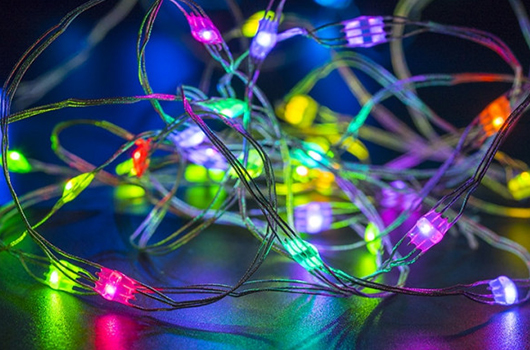
At a basic level, LED Christmas String Lights are built around a flexible wire that carries small light points along its length. The structure looks simple, but it allows a wide range of placement options.
The main components usually include:
- A flexible wiring line that can bend around objects
- Small LED light points spaced along the wire
- A connection end that links to power
- Protective coating that supports daily handling
Because of this structure, the lights can be adjusted without changing their function. They can curve around furniture, follow wall lines, or be shaped loosely across open space.
Typical usage in homes often falls into two directions:
Indoor use:
- wall outlines
- headboards or shelves
- window framing
Outdoor use:
- balcony edges
- small garden areas
- entrance frames
Compared with fixed lighting systems that stay in one position, string lights can be moved and reshaped without altering the setup. This makes them easier to adapt when decoration plans change.
Light Color Options And Visual Mood Control
Color choice plays a quiet role in how a room feels when lights are on. Even if the brightness stays the same, different tones can change the atmosphere.
Warm white tones usually feel softer. They tend to blend with furniture and indoor textures, creating a more relaxed visual environment.
Cool white tones feel clearer and more defined. They highlight edges and shapes more directly, which can make details easier to notice.
Multi color lighting brings variation. It adds movement to the visual field, especially when lights shift or alternate in patterns.
Single tone lighting keeps things steady. It does not shift attention too much and often feels more stable in longer viewing periods.
A simple comparison:
| Light Type | Visual Feeling | Common Use |
|---|---|---|
| Warm White | Soft and calm | Living spaces |
| Cool White | Clear and sharp | Entry or display areas |
| Multi Color | Dynamic and varied | Decorative zones |
| Single Tone | Stable and simple | Background lighting |
Color choice is often influenced by room surfaces as well. Light walls reflect differently than darker surfaces, which changes how the same lighting appears.
Length Planning, Bulb Spacing, And Visual Coverage Design
Length is one of the first practical decisions when setting up LED Christmas String Lights. A short string may only cover a small area, while a longer one needs more careful placement so it does not feel crowded.
Instead of focusing only on size, many setups also consider how the light spreads across space.
Bulb spacing is part of that planning:
- tighter spacing creates a denser light line
- wider spacing gives a lighter visual flow
This affects how balanced the decoration feels once installed.
Different areas often need different approaches:
- Small rooms usually need controlled placement so light does not dominate the space
- Larger rooms benefit from wider coverage so lighting does not feel isolated in one area
- Narrow surfaces like shelves or frames work better with even spacing
A simple way to think about it:
| Planning Factor | What It Changes | Visual Result |
|---|---|---|
| Length Choice | Coverage range | Fullness of layout |
| Tight Spacing | Light density | Stronger glow lines |
| Wide Spacing | Light distribution | Softer appearance |
Layout also creates rhythm. Even spacing gives a steady visual flow, while mixed spacing can feel more relaxed and informal depending on how it is arranged.
Power Supply Options And Connection Structure
Power setup influences where and how LED Christmas String Lights can be placed. Different environments require different connection methods.
Plug in systems are often used when a stable power source is available. They support continuous use without frequent changes.
Battery powered setups offer more freedom in placement. They are useful when there is no direct access to outlets or when lighting needs to be moved around.
USB powered options are often used indoors where simple connection to adapters or devices is convenient.
When connecting multiple strings together, consistency becomes important. If sections are not connected properly, light flow may feel uneven.
Cable arrangement also affects the final appearance. Loose wires can distract from the decoration, while organized lines help the lighting feel cleaner.
Simple handling habits include:
- keeping extension points close to the layout path
- avoiding sharp bends in connection areas
- separating power lines from decorative lines when possible
These small steps help keep the setup more stable during use.
Durability And Environmental Suitability
After LED Christmas String Lights are installed, what really matters is not the first impression, but how they hold up during regular use. Homes are active spaces. Even when decoration is meant to stay still, it usually gets touched, adjusted, or slightly moved over time.
The wire is the part that quietly takes most of that handling. If it bends easily and returns to shape without feeling stiff, installation feels more natural. If it is too rigid, even simple adjustments can start to look messy, especially around corners or furniture edges.
Indoors, conditions are usually mild, but small things still happen. Lights may be shifted during cleaning or pulled slightly when decorations are changed. Repeated bending in the same spot can slowly affect how smooth the wire feels over time.
Outdoor or semi-outdoor placement brings another layer. Even under cover, air changes and moisture in the environment can slowly influence the material. It may not be visible right away, but it affects how the lights behave after some time.
Storage is often where problems start without people noticing. If lights are tightly wrapped or forced into small spaces, the wire keeps unwanted curves. Leaving them looser during storage helps keep a more natural shape for later use.
Comparison With LED Christmas Curtain Lights
LED Christmas String Lights and LED Christmas Curtain Lights may look similar when turned on, but they behave very differently in real decoration.
String lights move like a line. They can be wrapped, bent, or shaped across different surfaces. That makes them easier to fit into spaces that are not perfectly straight or flat.
Curtain lights work in a more fixed way. They hang down in vertical rows and create a full surface of light. Instead of following shapes, they fill an area more evenly.
This leads to different usage habits:
- String lights are often used around edges, objects, or irregular shapes
- Curtain lights are often placed on flat walls or window surfaces
Curtain lights tend to act like a background layer. They stay steady and form a visual wall of light. String lights feel more flexible and are often used to add detail or break up empty areas.
In many home setups, both are used together. Curtain lights stay behind, while string lights are placed in front or around furniture. The result is not about brightness alone, but about depth and layering.
Installation Approaches For Different Home Areas
Installing LED Christmas String Lights usually depends on the space more than the product itself. Every area in a home has its own structure, and that structure naturally guides how the lights are placed.
On walls, the lights often follow edges or are loosely shaped across the surface. Some people prefer straight lines, while others let the string move more freely to match the room's layout.
Around windows, the lights usually trace the frame. This creates a clear outline that stands out when the room is darker. It also helps separate the window area from the rest of the wall without adding extra structure.
Furniture areas are usually more subtle. Lights can sit behind shelves, along headboards, or under surfaces. In these cases, they are not meant to stand out directly, but to create a soft background glow.
A few practical habits often make installation easier:
- using existing lines in the room instead of forcing new shapes
- keeping cables closer to edges to reduce visual clutter
- avoiding sharp bends near plug or connection points
- planning power access before fixing final positions
Outdoor spaces like balconies or entrances need more stable fixing. Since they are more exposed, the lights are usually secured more carefully so they don't shift with wind or movement.
Curtain lights, when used, are placed on flat vertical surfaces. The main focus is keeping the strands even so the surface looks consistent. String lights allow more freedom and can cross paths or wrap around structures depending on space.
Lighting Modes And Control Features
Many LED Christmas lighting setups now include different control options. These are not just about turning lights on or off, but about changing how they behave over time.
Some settings keep the light steady without movement. Others slowly change brightness or cycle through different patterns. Even small changes in timing or rhythm can make a room feel slightly different.
Control methods usually vary:
- simple switch for basic operation
- remote control for changing modes without touching the setup
- timer settings that turn lights on and off automatically
- pattern modes that repeat different lighting effects
In daily use, most people stick to one or two simple settings. A steady mode is often used for normal evenings, while other modes are saved for specific moments.
The flexibility is there, but it does not always need to be used. Sometimes a single stable setting is enough to keep the space feeling consistent.
Practical Decision-Making For Home Lighting Setup
Choosing LED Christmas String Lights for a home usually comes down to small practical choices rather than one clear decision. It starts with space, but quickly expands into how the lights will actually be used.
Room size is often the first thing people think about. Smaller rooms usually need controlled placement so the lights don't feel too dense. Larger spaces allow more freedom to spread lighting across different areas.
Use purpose also matters. Some setups stay in place for a long time and are only adjusted occasionally. Others change more often depending on events or decoration changes. That difference affects how flexible the lighting needs to be.
Color tone is another quiet factor. Softer tones tend to blend into indoor spaces more easily, while brighter tones stand out and draw attention. What works better often depends on the furniture, wall color, and general atmosphere of the room.
LED Christmas Curtain Lights are sometimes added when a background layer is needed. They create a steady surface of light, while string lights are placed in front or around objects to add detail.
In many real home setups, the final result is not planned as one big design. It comes from combining small decisions until the space feels balanced enough for everyday use.