
 English
 Español
 Français
 Deutsch
LED Christmas string lights are a widely used type of holiday decoration, providing illumination for homes, businesses, and public spaces. They consist of small light-emitting diodes (LEDs) attached to a flexible wire or cable, often combined with protective insulation and sometimes decorative elements.
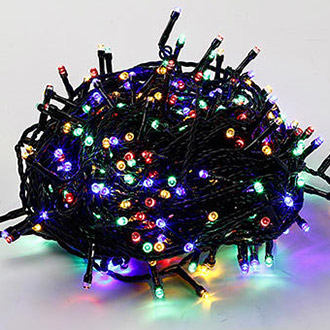
What Are the Processes Involved in the Formation of LED Christmas String Lights?
The production of LED Christmas string lights involves several stages, from material preparation to assembly and testing.
1. Material Preparation
LED preparation
Individual LEDs are manufactured, tested for color consistency, and grouped according to their electrical and visual specifications.
Diodes are coated or encapsulated in plastic to protect against physical damage and moisture.
Wire and insulation preparation
Conductive wires, usually made of copper, are cut to the required lengths.
Insulation is applied to prevent short circuits and provide durability. Flexible coatings allow lights to be bent or draped easily.
Additional components
Resistors, connectors, and sometimes controllers or fuses are prepared.
Decorative materials such as colored covers or shaped bulbs may be readied for attachment.
2. Assembly
LED attachment
LEDs are soldered or connected to the main wire at specified intervals, ensuring uniform spacing.
Some string lights use automated machines for high-speed attachment, while others may involve manual assembly for specialty designs.
Integration of electrical components
Resistors or circuit boards are added to regulate voltage and current for consistent light output.
Connectors, plugs, or end caps are attached to allow series connections or power supply compatibility.
3. Quality Control and Testing
Electrical testing
Each string is powered on to check that all LEDs function correctly.
Voltage and current measurements are taken to ensure safe operation.
Physical inspection
Strings are inspected for proper spacing, insulation integrity, and secure connections.
Protective coatings and decorative elements are checked for uniformity and durability.
These steps collectively ensure that LED Christmas string lights operate safely, provide consistent illumination, and meet industry standards.
What Are the Problems with LED Christmas String Lights?
Despite their advantages, LED Christmas string lights have several potential problems that affect performance, safety, and longevity.
1. Electrical and Technical Issues
LED failure
Individual diodes may burn out due to voltage spikes, poor soldering, or manufacturing defects.
In some series-wired strings, one failed LED can affect the operation of multiple lights.
Wire or insulation damage
Frequent bending, storage stress, or exposure to sharp objects can damage wires or insulation, bring about short circuits.
UV exposure outdoors may degrade insulation over time.
Controller or circuitry problems
In programmable or color-changing string lights, controllers or circuits can fail, affecting lighting patterns or functionality.
2. Environmental and Usage Factors
Moisture and outdoor exposure
Water penetration can damage LEDs or short the electrical circuit.
Temperatures may affect the flexibility of wires, making them brittle or prone to cracking.
Physical stress
Lights draped over rough surfaces or repeatedly handled can break bulbs, connectors, or wiring.
Improper storage, such as coiling tightly, may cause kinks or permanent bends.
3. Maintenance and Replacement Challenges
Replacement difficulty
In tightly spaced or sealed strings, replacing a single faulty LED may require disassembly or cutting the wire.
Specialty colors or decorative covers may no longer be available, complicating repairs.
Battery or power dependence
For battery-operated models, frequent battery replacement is necessary, increasing operational costs.
Power surges or incompatible adapters can damage the string.
4. Safety Considerations
Overheating risk
Although LEDs generate less heat than incandescent bulbs, faulty wiring or poor-quality components can bring about overheating.
Indoor usage of outdoor-rated lights without proper insulation may increase fire risk.
Choking or sharp-edge hazards
Small parts or detachable covers can pose a risk to children or pets.