
 English
 Español
 Français
 Deutsch
Outdoor lighting during the holiday season has moved well beyond a single string draped across a front porch. Municipalities, shopping districts, hospitality venues, and private homeowners have all picked up the practice of lighting up exterior spaces for the season. Wholesale Outdoor Christmas Lights have made larger installations a lot more practical, letting buyers keep product specifications consistent across bigger areas without needing to piece together several retail purchases.
That said, figuring out where to actually put these lights involves more than picking a few trees and calling it done. Different locations bring their own physical quirks, access limits, and visual goals. Some settings call for broad, even coverage, while others work better with lights tracing a precise outline. Getting a sense of the range of possible installation spots helps buyers and installers think through quantities, layouts, and attachment methods before committing to a plan.
Below is a look at the main categories of installation sites for outdoor festive lighting, along with the practical things worth keeping in mind for each.
What Makes Outdoor Christmas Lights Suitable for Varied Settings
Not every light fixture belongs outdoors, and outdoor lights themselves don't all handle winter conditions the same way. Wholesale Outdoor Christmas Lights meant for exterior use usually come built with a few construction features that help them adapt across different settings.
Weather resistance is one of the bigger factors. Rain, fog, and temperature swings are pretty common through winter in a lot of regions, so housings and connections need to hold up against moisture without failing partway through the season. Insulated wiring and sealed sockets help cut down the risk of short circuits or corrosion over a multi-week display.
Connection flexibility plays a role too. Long continuous wire runs let installers cover distance without needing intermediate splices, which cuts down on potential failure points along the line. Having multiple connection ends also opens up branching layouts that can follow the natural shape of a building or landscape more closely.
Installation methods vary quite a bit as well:
- Some lights come with clips or hooks built for gutters and shingles
- Others use flexible wire that wraps around branches and poles
- Some arrive as netting or grid patterns meant to drape over shrubs and bushes
That range of attachment styles means one batch of wholesale lights can end up serving several different purposes across different areas of the same property.
Where Are Wholesale Outdoor Christmas Lights Most Commonly Installed Around Residential Properties
Residential installations are probably the most visible and widespread category of holiday lighting. Homeowners tend to focus their attention on a handful of key areas.
Roof lines and gutters usually get the most attention. Tracing the contour of a house's eaves creates a clear outline that shapes the building against the night sky. Gutters also happen to work well as attachment points, since specialized clips can grip the edge without damaging shingles or downspouts.
Porch columns and railings offer both vertical and horizontal surfaces for wrapping lights or laying them in straight runs. Columns wrapped in lights draw the eye toward entryways, while railings lined with bulbs create a kind of guided path to the front door. These spots also tend to be easier to reach than rooflines, which makes them a reasonable choice for installers who'd rather stay off ladders.
Trees and shrubs on the property act as natural three-dimensional structures to work with. Branch canopies can be draped from the top down for a cascading look, while trunks wound with lights add some visual weight to the landscape. Shrub rows and hedges tend to respond well to net lighting, since it conforms to the uneven surface of foliage without needing each bulb placed individually.
Window frames and door outlines usually get a smaller-scale treatment. Miniature light strings fixed along exterior frame edges outline the openings without blocking views from inside. That approach adds some depth to the facade without overwhelming the architecture around it.
What Commercial and Public Spaces Typically Use Wholesale Outdoor Lighting
Commercial districts tend to benefit from coordinated lighting displays that pull visitors in and stretch foot traffic later into the evening. Retailers, restaurants, and service businesses use outdoor lights for both looks and practical reasons alike.
Storefront facades along shopping streets often feature lights along parapet edges, around display windows, and above entrance canopies. Unlike a lot of residential setups, commercial installations often need to stay functional through the whole extended holiday sales period, so durability and ease of upkeep tend to matter more here.
Pedestrian shopping areas and town center plazas open up opportunities for overhead lighting. Strings suspended between lamp posts or building facades create a kind of canopy effect over the walkway. That setup gives ambient light for evening shopping while tying multiple storefronts together under one cohesive theme.
Hotels and resort entrances tend to prioritize the arrival experience. Driveway approaches lined with lighted trees or arches mark the shift from public road to private property. Lobby entrances framed with lights guide guests toward the main doors, while porte-cochère structures support overhead installations that stay clear of vehicle traffic underneath.
Outdoor dining areas attached to restaurants and cafes have turned into a pretty significant spot for festive lighting too. Canopies, umbrellas, and pergola structures already offer built-in support for hanging light strings. These setups do double duty — they build a pleasant atmosphere for diners and stretch outdoor seating hours further into the evening.
How Are These Lights Used in Community and Municipal Installations
Local governments and neighborhood associations often coordinate public lighting displays that cover more ground than individual commercial or residential efforts typically would. These installations serve a wider community audience and stay up for a defined seasonal window.
Municipal parks and green spaces usually get perimeter and pathway lighting. Walkways lined with lights encourage people to keep using parks in the evening that might otherwise close up at dusk. Trees within the park grounds can also be lit individually to create focal points visible from the surrounding streets.
Public squares and gathering spaces hosting seasonal events often work lighting into their temporary structures. The lights themselves tend to stay fairly simple here, acting more as a supporting element to whatever other holiday features are already in place.
Neighborhood entrance signs and markers benefit from a bit of targeted lighting too. A well-lit entry sign helps nighttime visibility for residents and visitors, while also signaling the seasonal feel of the community. These installations usually stay smaller in scale but tend to carry some symbolic weight for people living nearby.
Bridges and pedestrian overpasses turn out to be an unusual but pretty effective surface for lighting. Along handrails and structural edges, lights trace the line of the crossing and stay visible from a range of angles and distances. These spots need a bit more care around wind exposure and vibration from passing traffic though.
| Installation Setting | Primary Surface or Structure | Typical Lighting Approach | Key Practical Consideration |
|---|---|---|---|
| Residential roof lines | Gutters, eaves, shingle edges | Contour tracing with clip-attached strings | Roof access safety and clip compatibility |
| Residential trees and shrubs | Branches, trunks, foliage canopies | Draping, wrapping, or netting | Branch load capacity and wind movement |
| Commercial storefronts | Parapets, windows, entrance canopies | Horizontal runs along building lines | Electrical load and display hour duration |
| Pedestrian shopping areas | Lamp posts, building facades | Overhead suspended strings | Clearance for foot traffic and maintenance access |
| Hotel entrances | Driveway approaches, porte-cochères | Arched or overhead linear arrangements | Vehicle clearance and arrival sightlines |
| Municipal parks | Walkways, individual trees | Pathway borders and focal tree lighting | Public safety and fixture durability |
| Bridges and overpasses | Handrails, structural edges | Contour-following rail placement | Wind loading and vibration resistance |
Looking across these settings, it's pretty clear that installation choices tend to follow the character of the space itself — residential areas leaning toward personal, contour-based displays, while commercial and municipal spaces generally aim for broader coverage that holds up over a longer stretch of use.
What Event Venues Benefit from Wholesale Outdoor Christmas Lighting
Temporary events during the holiday season tend to lean heavily on atmospheric lighting to shape spaces and guide people through them. Unlike fixed installations at commercial or municipal sites, event venues usually need lighting that can go up quickly, adapt to different layouts, and come back down again without leaving any lasting marks behind.
Winter markets and temporary retail stalls are probably one of the more common event applications out there. Canopies and tent structures give overhead support for hanging light strings that light up product displays and walking aisles. The lights aren't purely decorative either — they give vendors enough light to handle transactions and let customers look over goods once evening sets in.
Outdoor wedding and party venues have been leaning into festive lighting more during December in recent years. Ceremony backdrops, reception tents, and pathway borders often get some kind of light treatment. The warmth of incandescent-style bulbs versus the cooler brightness of white LEDs can shift the mood of an outdoor space quite a bit, giving organizers room to shape the atmosphere around the occasion.
Drive-in theaters and open-air cinemas sometimes work lighting into perimeter fences and concession areas during special holiday screenings. The main viewing area stays dark, of course, but the surrounding zones can still benefit from controlled lighting that helps guide patrons around without spilling onto the screen.
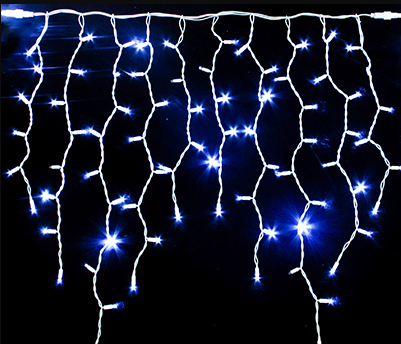
Photography backlots and outdoor studios occasionally keep holiday lighting up for the whole season for client use. These setups work as reusable backdrops for family portraits, corporate holiday cards, or social content. Being able to reposition or reconfigure lights easily is part of why wholesale quantities tend to work well in these settings.
Where Are Wholesale Lights Installed in Hospitality and Leisure Settings
Hotels, resorts, and leisure facilities run on a different timeline than most residential or retail setups. Their lighting displays often stay up from late autumn through the new year, serving guests staying multiple nights who expect a fairly consistent festive atmosphere throughout their visit.
Resort grounds with extensive landscaping give plenty of surfaces to work with. Walking paths winding through gardens or along water features often get border lighting that helps with both safety and appearance at once. Ponds and fountains surrounded by lights create reflective surfaces that double the visual effect without needing extra fixtures.
Campground common areas draw in visitors looking for a more rustic holiday feel. Reception buildings, activity tents, and communal fire pits tend to become natural gathering spots once warm lighting surrounds them. Overhead strings help create a sense of enclosure and comfort in open spaces that might otherwise feel a bit exposed during winter evenings.
Ski resort base areas bring together an unusual mix of built structures and natural features. Lift stations, equipment rental buildings, and slope-side restaurants all tend to act as anchor points for more extensive lighting. Snow cover reflects light back upward too, which means lower-intensity setups can often achieve decent brightness compared with non-snowy environments.
Observation towers and scenic overlooks on resort properties usually get perimeter lighting that outlines the structure without blocking any views. These installations pull double duty — guiding visitors toward the observation point while also making the tower visible from lower ground.
What Installation Considerations Apply to Different Locations
Every installation environment comes with its own set of physical and operational limits. Overlooking these factors tends to lead to failed fixtures, damaged structures, or unsafe conditions down the line.
Surface attachment methods shift depending on location. Brick and masonry call for different clips than wooden siding or metal gutters do. Trees with rough bark hold wrapped wire differently than smoother-barked varieties. Working through attachment strategies before buying lights helps avoid last-minute improvising that might not hold up securely.
Height and access shape what tools and personnel actually get needed. Ground-level installations around porches and bushes can usually be handled by one person with minimal gear. Rooflines and building facades tend to need ladders, scaffolding, or aerial lifts, along with proper safety precautions for working up high.
Power source proximity affects layout decisions quite a bit. Long extension runs bring voltage drop into the picture and create tripping hazards along the way. Placing lights near outdoor outlets, or planning ahead for proper power distribution, tends to cut down on these headaches.
Weather exposure matters both during installation and once the lights are actually running. Wind puts strain on suspended strings and can cause bulbs to swing and knock against hard surfaces. Heavy snow buildup adds weight that gutters and branches may not be built to support. These conditions tend to shape both which lights get chosen and how they get attached.
- Attachment points need to handle the weight of the light string plus whatever snow or ice might build up
- Cable management helps keep loose wires from becoming a hazard in pedestrian areas
- Ground-level connections do better with weatherproof covers and staying elevated off wet surfaces
- Regular inspection during the display period tends to catch small failures before they spread to larger sections
How Does Scale of Installation Affect Lighting Choices
The size of an installation shapes pretty much everything, from what products get chosen to how much labor is needed. What works fine for a single-family home usually won't cut it for a downtown business district, and the reverse holds true too.
Small-scale residential installations typically rely on single-run string lights with connectors built right in end to end. The wiring path stays fairly simple, and total length rarely goes beyond what a standard household outlet can handle. Product choice here tends to lean more toward looks and ease of setup than anything electrical-engineering related.
Medium-scale commercial installations often need multiple runs branching off from several power sources. The layout might cover multiple building faces or stretch across a larger outdoor area, so coordinating between sections becomes part of the job. Product choices usually shift toward longer spools or larger batches of standard-length strings to keep the display looking consistent.
Large-scale municipal installations can involve hundreds or even thousands of individual units spread across several blocks or an entire park. At that scale, planning shifts more toward logistics — how lights get stored before going up, how crews coordinate their work, and how replacement stock gets managed throughout the display period.
- Small installations tend to favor ready-to-use sets with clips or hooks already attached
- Medium installations often benefit from bulk spools plus separate attachment hardware
- Large installations usually need proper inventory management and organized labeling systems
The wholesale channel tends to matter most at medium and large scales, where having consistent product availability across multiple purchase orders helps keep color matching and connector compatibility in check.
What Role Does Installation Flexibility Play in Various Environments
Different surfaces and structures call for different installation approaches. A lighting product that works well in one setting might not suit another at all.
Straight surfaces — walls, railings, straight rooflines — tend to accept linear string placement with barely any adjustment needed. The lights follow a predictable path, spacing stays even throughout, and this simplicity makes straight surfaces fairly forgiving even for less experienced installers.
Curved and cylindrical structures — trees, posts, columns — usually call for spiral wrapping or flexible draping instead. The installer has to manage the changing diameter while wrapping upward, keeping spacing fairly even without pulling too tight. Softer, more pliable wire tends to make this job noticeably easier.
Flat horizontal areas — hedges, shrub rows, flat rooftops — work well with net lighting or grid patterns. These cover ground efficiently without needing each bulb placed by hand. The trade-off comes in reduced flexibility when it comes to contouring around obstacles.
Complex irregular shapes — signage, sculptures, architectural details — tend to need the most adaptable products available. Small bulbs on thin, flexible wire let installers trace intricate outlines while keeping visual continuity intact. Heavier gauge wire resists tight bending and can pull away from sharper corners.
- Flexible wire conforms to curves and corners without springing back into shape
- Stiffer wire holds its shape but takes more effort to work into complex paths
- Net lighting trades some contouring ability for faster coverage of larger areas
- Wrap-style lights offer more controlled tension for even spiral placement on posts and poles
In the end, the installation environment really decides which products from a wholesale order end up where. A single order might include light strings for rooflines, net lights for shrubs, and wrap lights for columns — each one filling a different spatial need across the same property.