
 English
 Español
 Français
 Deutsch
Why Are Outdoor Lighted Deer For Christmas Used In Outdoor Decoration Spaces
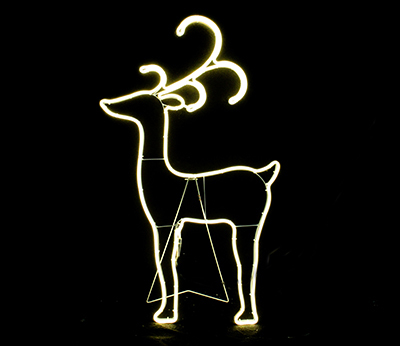
Outdoor decorative setups tend to rely on objects that can stay visible in open space without losing shape or light effect, especially when the surrounding environment becomes darker, and Outdoor Lighted Deer For Christmas fits into this kind of use because the form itself carries both structure and illumination in one combined presence rather than separating decoration and lighting into different elements.
In many outdoor yards and garden spaces, decoration is not arranged only for close viewing, since the object is often seen from different distances, sometimes from a window, sometimes from a walkway, and sometimes from a wider open angle where background and foreground blend together, so the shape needs to remain readable even when light conditions shift.
Compared with indoor decoration, outdoor placement brings a more unstable environment, where wind moves through open areas, surfaces cool down and warm up through the day, and moisture may appear without warning, and all of these factors slowly influence how decorative structures stay in place and how long their visual shape remains consistent.
Typical use patterns include:
- Placing a visible figure in garden open space for directional visual focus
- Adding lighted shapes near entry areas to create spatial definition
- Filling empty lawn areas where simple lighting feels too flat
- Creating layered depth in outdoor decoration scenes
What Structural Features Support Outdoor Lighted Deer For Christmas In Outdoor Conditions
Outdoor decorative lighting structures depend less on appearance alone and more on how the internal frame holds shape over time, since the outline of Outdoor Lighted Deer For Christmas is what carries the lighting path, and any shift in structure can change how the light spreads across the form.
The frame usually works as a guide for both shape and lighting route, meaning the outline is not just visual but also functional, and when that outline stays steady, the light distribution follows it in a consistent way without breaking into uneven sections or dim gaps.
Wind exposure in open spaces does not always apply strong force, yet continuous light movement over time can still influence lighter structures, so base balance and connection points become important for keeping the shape stable on uneven ground or soft outdoor surfaces.
Key structural points include:
- Frame stability under repeated outdoor exposure
- Lighting lines following the full body outline
- Wiring arranged along structural paths instead of loose placement
- Base contact designed for uneven ground adjustment
How Do Outdoor Lighted Deer For Christmas React To Rainy And Moist Weather Conditions
Outdoor environments rarely stay dry for long periods, and moisture becomes part of the natural condition that decorative lighting structures face, especially when placed in open gardens where rain can reach all sides without obstruction.
Outdoor Lighted Deer For Christmas structures interact with moisture in two ways, one through external surface contact and another through how internal lighting components are protected from direct exposure, and both aspects influence how stable the visual effect remains during wet conditions.
When rain falls across the structure, water movement follows gravity across surfaces, and in well-arranged installations, this movement does not stay in one point for long, instead it flows downwards and away from electrical paths, which reduces direct impact on lighting continuity.
Ground conditions also change during moisture exposure, since soil or grass may soften slightly, which affects how firmly the base stays positioned, and in some layouts, this shift can slowly influence alignment if the placement is not adjusted for repeated wet cycles.
Key moisture-related factors:
- Surface exposure to rain and humidity changes
- Protection of lighting pathways from direct water flow
- Stability of base under softened ground conditions
- Water drainage direction around installation area
What Installation Conditions Influence Outdoor Lighted Deer For Christmas Performance In Gardens
Garden environments are rarely uniform, even when the space looks simple from a distance, since small changes in slope, soil density, and surrounding objects all influence how a decorative structure behaves once it is placed and left in position for longer periods.
Outdoor Lighted Deer depends on ground contact for stability, so even slight unevenness can shift balance over time, especially when wind or moisture adds extra movement to the base area, and that makes placement more than just a visual decision.
Surrounding objects also play a role in how the structure is experienced visually, since plants, fences, or pathways may block or reflect light in different ways, changing how the deer shape appears from various viewing points.
Installation conditions often include:
- Ground flatness influencing structural balance
- Space availability within garden layout
- Distance from plants and hard surfaces
- Exposure level to open airflow movement
How Does Garden Layout Affect Visual Balance Of Outdoor Lighted Deer
Garden layout shapes how decoration elements interact with each other, and in outdoor lighting arrangements, placement of a single structure can influence the entire visual flow of the space, especially when lighted figures are used as central or supporting visual points.
Positioning near open areas usually creates clearer visibility because light spreads without obstruction, while placement closer to background zones produces a layered appearance where depth becomes more noticeable than direct focus.
Angle of view also changes perception, since the same structure may appear brighter or softer depending on where it is seen from, and that variation becomes part of how outdoor lighting is experienced rather than controlled.
Main layout influences include:
- Central placement creating strong visual focus
- Edge placement guiding movement through space
- Background placement adding depth layering
- Open placement increasing light spread effect
What Factors Should Be Considered When Matching Outdoor Lighted Deer With Other Decorations
Outdoor decoration rarely works as a single object standing alone in space. In many garden layouts, different lighting pieces sit close to each other, and Outdoor Lighted Deer For Christmas often ends up sharing the same visual field with strings of light, smaller figures, or simple ground lights. The way these elements sit together changes how the whole scene is read at night.
When objects are placed too tightly, light starts to mix and outlines become less clear. A deer shape may still be visible, yet the edges can feel less defined when brightness overlaps from nearby decorations. Leaving space between elements helps each form keep its own outline instead of blending into a single bright area.
Color tone also shifts the feeling of the space. When lighting shares similar tone, the garden looks calmer and more continuous. When tones differ too much, attention splits, and the eye moves between separate points instead of resting on one area.
Size balance adds another layer. A large deer placed near much smaller items naturally draws attention, while similar scale across pieces keeps the view more even.
Key points that usually matter:
- Distance between lighting pieces to avoid visual crowding
- Light tone consistency across nearby decorations
- Size balance between main figure and smaller lights
- Avoiding too many focal points in one direction
How Do Outdoor Lighted Deer For Christmas Perform During Long Outdoor Placement Periods
Outdoor placement means constant exposure, even when nothing is happening around it. Wind passes through open spaces, moisture comes and goes, and temperature shifts across day and night. Outdoor Lighted Deer For Christmas slowly reacts to all of this over time, not in sudden ways, more like small changes building up quietly.
Wind does not always feel strong, yet repeated movement over many days can influence position slightly, especially when the base sits on soft or uneven ground. That shift may be small at first, then becomes more noticeable if the setup is left untouched.
Light performance also depends on how well connections hold up under continuous exposure. When wiring stays protected and stable, lighting usually keeps a steady rhythm. If not, brightness can feel uneven in certain parts of the structure.
Over time, typical changes include:
- Slow repositioning caused by repeated wind pressure
- Gradual surface dulling from outdoor exposure
- Light consistency shifting in weaker connection points
- Small alignment changes on soft ground
What Role Does Installation Position Play In Lighting Visibility And Stability
Where the structure sits in the garden often changes everything about how it looks and how stable it feels. Outdoor Lighted Deer For Christmas placed on flat ground tends to sit more naturally, while uneven areas slowly pull weight to one side.
Ground level placement usually blends into the garden itself. Grass, soil, or gravel becomes part of the background, so the deer shape feels connected to the space instead of floating above it. Raised placement changes that feeling and pushes visibility farther, especially when the garden is viewed from a distance.
Small slopes or uneven ground may not cause immediate problems, yet over time they can shift balance. After repeated exposure to wind or moisture, even a slight tilt becomes easier to notice.
Position effects often seen in practice:
- Flat ground gives steadier visual base
- Raised position improves long-distance visibility
- Uneven ground slowly affects balance
- Open placement increases exposure to light and wind
How Can Outdoor Lighted Deer For Christmas Be Arranged For Different Outdoor Space Sizes
Garden size decides how much can be placed without the scene feeling crowded. Small spaces work better with fewer pieces, since open breathing space helps the main shape stay clear. When too many lights are placed close together, edges overlap and the visual message becomes harder to read.
Medium spaces allow more freedom. A few elements can be placed in different corners, guiding the eye across the area instead of keeping everything in one spot. The deer figure often sits in a visible position while other lights support it around the space.
Large spaces change the approach again. Distance between objects becomes part of the design. Instead of grouping everything tightly, elements are spread out so movement of light feels wider and more layered.
Simple patterns based on space:
- Small gardens keep limited placement for clarity
- Medium gardens allow balanced distribution
- Large gardens use wider spacing for depth
- Open yards rely on distance to shape flow
| Space Size | Arrangement Style | Visual Result |
|---|---|---|
| Small area | Minimal setup | Clear focus, less distraction |
| Medium area | Balanced placement | Even flow across space |
| Large area | Wide spacing | Layered visual movement |
| Open yard | Distributed layout | Expansive lighting presence |