
 English
 Español
 Français
 Deutsch
Winter nights change the look of outdoor space in a very direct way. Once sunlight fades, many objects lose their outline. Buildings, paths, open yards, all start to look similar. It becomes harder to read distance and shape just by sight.
Lighting steps in to rebuild that missing structure. It does not only make things brighter. It gives edges back to space, so people can tell where one area ends and another begins. Even a simple light source can change how a large open area feels.
In many outdoor setups, lighting works more like a guide than decoration. It quietly supports movement and viewing direction.
Typical roles include:
- marking walking paths without physical barriers
- helping open spaces feel less empty at night
- making key spots easier to notice
- separating different zones in one view
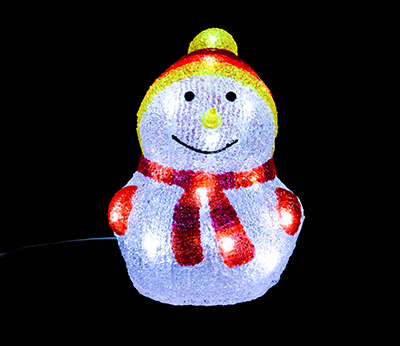
LED Snowman Light often appears in these layouts because the shape itself is easy to recognize. Even without strong brightness, the outline already carries meaning linked to winter scenes. When light is added inside or around it, the form becomes clearer in low visibility.
How Does LED Snowman Light Become a Visual Focus in Outdoor Scenes
Outdoor scenes at night usually have one clear feature: most areas are dark, and only a few points carry visible light. Anything with shape and brightness naturally becomes a reference point for the eye.
LED Snowman Light fits into that situation without effort. The snowman shape is simple, made of stacked forms that the eye reads quickly. Once light is added, the outline becomes stronger, and the figure stands out from the background.
Placement changes how strong the focus becomes. Near an entrance, it feels like a greeting point. Along a path, it becomes part of movement. In open space, it works like a marker that helps people understand scale.
Several factors affect how it is seen:
- how far the viewer stands
- how dark the surrounding area is
- whether other lights are nearby
- what kind of background sits behind it
What Design Elements Influence the Appearance of LED Snowman Light
The final look of Snowman Light depends on how structure and lighting interact. The shape itself is simple, but small design choices change how it appears in real space.
The frame gives it identity. Without a stable frame, the snowman shape would lose clarity once viewed from a distance. The structure keeps proportions in place so the form stays readable even when lighting conditions change.
Light placement also matters. When light is spread evenly, the surface feels calm and balanced. When light is concentrated in certain areas, brightness shifts and creates stronger contrast.
Surface material plays a quieter role. Some surfaces soften the light, making the glow smoother. Others reflect more light, which increases brightness in certain angles.
Main design points usually include:
- frame stability and shape control
- light spread across different sections
- surface response to brightness
- connection points for outdoor setup
All these parts work together, so the snowman form stays clear in outdoor night conditions.
How Do LED Holiday String Lights Work With Light in Decoration Layouts
LED Holiday String Lights often act as the background layer in outdoor decoration. They stretch across space instead of staying in one position. This gives them a different role compared to Snowman Light.
String lights form lines. Those lines guide the eye across fences, trees, buildings, or open spaces. They do not create a single focus point. Instead, they connect many points into one visual path.
When placed together with LED Snowman Light, the effect changes. The snowman becomes the main object, while string lights shape the surrounding flow. One holds attention, the other supports movement across the scene.
| Lighting Type | Role in Scene | Visual Behavior |
|---|---|---|
| LED Snowman Light | Main focal object | Fixed attention point |
| LED Holiday String Lights | Background connection | Continuous line flow |
| Combined layout | Shared structure | Layered visual depth |
Why Does Layered Lighting Improve Outdoor Holiday Atmosphere
Outdoor decoration feels different when light is arranged in layers instead of one level. Layered lighting means some objects are closer, some are farther, and brightness changes between them.
LED Snowman Light usually sits in the middle layer. It is not flat against a surface, and not far in the background. That position makes it easy to notice without taking over the entire view.
String lights often form the outer layer. They wrap around space or extend along boundaries. This creates a frame around the scene.
When both layers exist, the view gains depth:
- objects feel separated instead of overlapping
- background no longer looks empty
- movement through space becomes easier to read
- lighting feels more structured instead of scattered
Even without complex design, layering alone changes how outdoor space is understood.
How Do Weather Conditions Influence Outdoor LED Decoration Performance
Outdoor lighting always works under changing conditions. Temperature shifts, moisture in the air, and wind movement all affect how decoration behaves over time.
LED Snowman Light stays in open space, so it needs to keep shape under these changes. Cold or warm shifts may affect material behavior slightly, especially during long exposure.
Moisture is another factor. Outdoor air often carries humidity, and surfaces may collect small amounts of water. Good design avoids water staying in one place for too long.
Common environmental influences include:
- surface moisture after rain or fog
- temperature change affecting material feel
- wind pressure on larger structures
- long exposure in open environments
LED Holiday String Lights also react to these conditions. When stretched across space, tension and placement become important to keep lines stable.
Both types of lighting rely more on steady setup than heavy protection. Stability comes from placement and structure rather than extra complexity.
How Do LED Holiday String Lights Expand Decorative Flexibility
LED Holiday String Lights are often used because they adapt easily to different spaces. They do not depend on a fixed shape, so they can follow the layout of the environment.
They can run along walls, wrap around objects, or stretch across open air. This flexibility makes them useful in both narrow and wide areas.
When combined with Snowman Light, string lights take a supporting role. They do not compete for attention. Instead, they extend the visual field around the main object.
Common uses include:
- outlining walkways or entrances
- connecting separate decorative points
- shaping edges of open areas
- adding light lines above or beside spaces
This makes it easier to adjust decoration layouts without changing the core elements of the scene.
How Do LED Holiday String Lights Work With LED Snowman Light in Decoration Layouts
In many outdoor decoration setups, LED Holiday String Lights and LED Snowman Light do not work in isolation. They usually share the same visual space, each taking a different role in how the scene is formed.
Snowman Light often acts as a fixed point. It stays in one position and gives the scene a clear shape that people can quickly recognize. LED Holiday String Lights behave in a different way. They stretch across space and create direction, guiding how the eye moves from one area to another.
When both appear in the same environment, the result is a layered view. The snowman becomes a visual pause point, while string lights connect the surrounding space.
A simple breakdown helps show the relationship:
| Element | Visual Role | Spatial Behavior |
|---|---|---|
| LED Snowman Light | Fixed focal shape | Stationary presence |
| LED Holiday String Lights | Connecting light lines | Extended coverage |
| Combined use | Scene structure support | Movement + focus balance |
In many outdoor scenes, this combination helps avoid empty visual gaps. One element holds attention, the other spreads it across space.
Why Does Layered Lighting Improve Outdoor Holiday Atmosphere
Layered lighting appears when different light sources sit at different visual levels. Instead of one flat brightness across space, the environment gains depth and separation.
LED Light usually sits in a middle position. It is visible enough to catch attention, yet not so dominant that it covers everything around it. This balance allows it to interact with both nearby and distant lighting.
LED Holiday String Lights often sit at wider boundaries. They follow edges of structures, paths, or open frames. This creates a loose outline around the scene.
When layered together, several effects become noticeable:
- objects feel more separated in space
- open areas gain structure instead of looking flat
- movement through space becomes easier to read
- lighting transitions feel more natural
Many outdoor decoration layouts rely on this layering because it does not require complex structure. Light alone can define depth when arranged with some balance.
How Do Weather Conditions Influence Outdoor LED Decoration Performance
Outdoor decoration systems operate in changing environments. Temperature shifts, wind movement, and moisture all influence how lighting performs over time.
Snowman Light is often placed in open areas, so its frame and surface need to stay stable during these changes. Material flexibility becomes important when conditions shift between cooler and warmer periods.
Moisture is another factor. Outdoor air can carry humidity, and surfaces may collect condensation or light water exposure. Over time, this can affect how clean the light appears if not managed through design and placement.
Common environmental influences include:
- moisture collecting on surfaces during cool conditions
- wind affecting balance of taller structures
- temperature changes affecting material response
- long exposure in outdoor placement
LED Holiday String Lights also react to these conditions. When stretched across wide areas, their stability depends on how well they are fixed and supported.
In many installations, both lighting types rely more on stable setup than complex protection systems. Proper positioning often matters more than anything else.
What Placement Strategies Are Used in Outdoor Decoration Layouts
Placement plays a large role in how LED Snowman Light is perceived in outdoor spaces. The same object can feel different depending on where it is placed.
Near entrances, Snowman Light often acts as a visual greeting point. It draws attention before people fully enter the space. In open areas, it becomes a reference marker that helps define scale. Along pathways, it supports movement and direction.
LED Holiday String Lights usually shape the surrounding layout. They outline paths, frame open areas, or connect different decorative elements into one structure.
Common placement approaches include:
- positioning near entry zones for visibility
- placing in open areas to support spatial balance
- combining with string lights to form visual routes
- using background structures for support and contrast
Many decoration layouts depend on simple placement logic rather than complex arrangement. Small changes in position can noticeably change how the entire scene is read.
How Does Power Arrangement Affect Large Scale Decoration Setup
When multiple lighting elements are used together, power arrangement becomes part of the overall planning. LED Snowman Light and LED Holiday String Lights often share the same system space, so distribution needs to stay balanced.
LED Snowman Light usually requires stable connection due to its fixed structure. LED Holiday String Lights, on the other hand, spread across longer distances, which means their layout must consider spacing and connection points.
In larger setups, some practical considerations appear:
- avoiding long uneven stretches without support
- keeping connection points accessible
- separating different lighting paths for clarity
- maintaining consistent distribution across zones
Good arrangement helps reduce pressure on individual sections of the setup. It also keeps visual output more stable across the entire space.
In many outdoor installations, power planning is handled alongside placement, since both influence final appearance.
How Do LED Holiday String Lights Expand Decorative Flexibility
LED Holiday String Lights offer flexibility because they are not tied to a fixed shape. They can adapt to different structures and spaces without requiring major adjustments.
They can follow straight paths or irregular outlines depending on the environment. This makes them suitable for both compact and wide outdoor areas.
When used with Snowman Light, string lights help extend the visual environment beyond the main object. They fill empty space and connect different points together.
Common usage patterns include:
- outlining fences or building edges
- connecting multiple decorative objects
- shaping walkways with continuous light lines
- adding overhead or side-level illumination
This flexibility allows many outdoor decoration layouts to adjust easily without changing core elements. LED Light provides focus, while string lights handle expansion.
Why Do Outdoor Holiday Displays Continue to Evolve in Lighting Style
Outdoor lighting styles change as space usage and visual expectations shift. In many environments, decoration is no longer limited to static placement. Movement, layering, and connection between elements have become more common.
LED Snowman Light continues to be used because it provides a clear and simple visual identity. It does not require complex arrangement to be understood. LED Holiday String Lights remain widely used because they can adapt to almost any space shape.
Over time, decoration layouts have moved toward combinations rather than single elements. Instead of relying on one type of lighting, different forms are placed together to build structure.
Common directions in this shift include:
- combining fixed shapes with flexible lighting lines
- creating layered visual depth across open space
- improving movement flow through lighting guidance
- adjusting layouts based on available environment
In many outdoor scenes, lighting has become part of how space is structured, not only how it is decorated.