
 English
 Español
 Français
 Deutsch
A room can feel genuinely different after a small change in lighting. Furniture may stay in the same place, while a soft line of light around a wall, shelf, mirror, or window creates a new visual layer nobody expected. This is one reason LED String Lights for Decoration have become useful for people who want to change the mood of an indoor space without replacing the main lighting fixture overhead.
The choice of room matters because every space has a genuinely different purpose. A bedroom may need a calm atmosphere at the end of a long day, while a living room often needs flexible lighting for social activities happening on a Friday night. A study area may benefit from subtle decorative light, while a hallway can use small lighting details to make an otherwise plain surface more interesting to walk past.
An LED String Light can adapt to many of these spaces because it's flexible and relatively easy to arrange around what's already there. The result depends less on covering an entire room and more on choosing a suitable location, visual balance, and lighting style that fits the mood already in place.
Why Does Room Type Matter When Using LED String Lights?
Different rooms create genuinely different visual demands on a decorator. A large living room may already contain several furniture pieces, wall decorations, and light sources competing for attention. A smaller bedroom may have fewer visual elements, so even a short string of lights can become genuinely noticeable against a bare wall.
The purpose of the room also affects how the lights should be arranged. Decorative lighting should support the existing atmosphere, rather than compete with everything else in the space.
| Room | Common Decorative Purpose |
|---|---|
| Bedroom | Creating a soft and relaxed atmosphere |
| Living room | Adding warmth around furniture and walls |
| Study | Adding visual interest around a desk or shelf |
| Dining room | Creating a gentle background effect |
| Children's room | Adding playful decorative details |
| Hallway | Highlighting walls, frames, or corners |
There's no single arrangement that suits every room in a house. The same product can create genuinely different effects depending on where it gets placed.
Can the Bedroom Work Well with LED String Lights for Decoration?
The bedroom is often associated with rest, personal routines, and quiet activities at the end of a day. Decorative lighting can help make the space feel genuinely more personal without changing the main furniture arrangement already settled into place.
LED String Lights for Decoration can be placed around a headboard, along a wall edge, near a mirror, or around a shelf. These positions create a visual frame that draws attention to selected areas, instead of illuminating the entire room at once.
A simple arrangement can also make a bedroom feel genuinely less empty. A plain wall beside the bed, for example, may become part of the room's decoration when a light string follows its shape naturally.
The placement should remain practical throughout. Cables shouldn't interfere with walking paths, bedding, doors, or other everyday movements around the room. The lighting should also get installed according to the product instructions and kept away from locations where heat or moisture could create a problem down the line.
How Can LED String Light Decoration Change a Living Room?
The living room often has genuinely more visual elements than other rooms in the house. Sofas, tables, cabinets, artwork, plants, and entertainment equipment can all compete for attention at once.
An LED String Light can add another layer without requiring a major change to the furniture already arranged. It can get placed behind a shelf, around a wall feature, along a cabinet edge, or near a decorative display sitting in a corner.
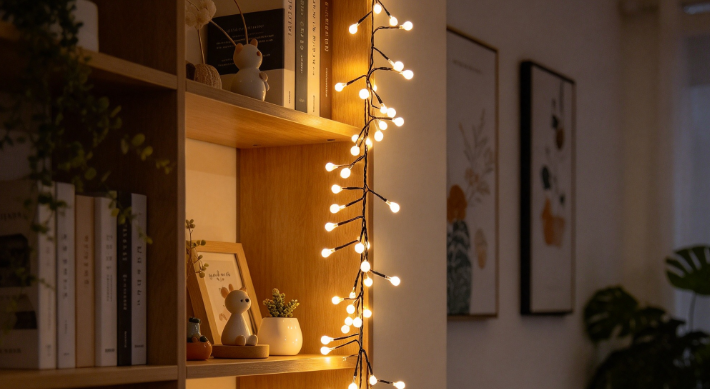
The location can genuinely change the visual effect produced. A light string placed around a wall feature can draw attention toward that area specifically. A string arranged behind furniture can create a softer background glow instead. A decorative line placed around a shelf can make the objects displayed there genuinely easier to notice from across the room.
The goal isn't adding light everywhere possible. A focused arrangement often makes the room feel genuinely more organized because the lighting follows an intentional visual path rather than scattering randomly.
Is the Study Room Suitable for Decorative LED String Lights?
A study or home office usually needs a genuinely clear working area free of distraction. Strong decorative elements around the desk can become distracting if they compete with the work surface during a focused afternoon.
That doesn't mean decorative lighting has no place in this room, though. A small LED String Light can get placed around a bookshelf, behind a monitor area, along a wall, or around a storage unit. This keeps the decorative element away from the main working surface while still giving the room some personality worth noticing.
The distinction between decorative and task lighting genuinely matters here. String lights shouldn't automatically replace lighting intended for reading, writing, or detailed work under a desk lamp.
| Study Area | Possible String Light Position |
|---|---|
| Bookshelf | Along the shelf edge |
| Wall | Around a selected section |
| Storage unit | Around the outer frame |
| Display area | Behind or beside objects |
| Desk surroundings | Along a nearby wall rather than across the work surface |
This approach allows decoration and everyday function to coexist without one undermining the other.
Can LED String Lights Add Character to a Dining Room?
Dining rooms often have a central table surrounded by chairs, leaving walls and other vertical surfaces genuinely available for decoration. String lighting can work around these areas without taking space away from the table itself.
An LED String Light, for example, can follow the edge of a wall display, frame a window, or sit around a nearby cabinet. The light becomes part of the background, rather than another object occupying the dining surface during a family dinner.
This can prove useful when the room serves both everyday meals and social gatherings on a weekend. A simple lighting arrangement can remain in place while the rest of the room changes through different table settings and decorations throughout the year.
The light should also get positioned so cables remain away from areas where people regularly walk or move chairs during a meal.
What Makes a Children's Room Different?
A child's room often includes colorful furniture, toys, books, artwork, and personal decorations already competing for space. Lighting can become another part of this visual environment layered on top.
LED String Lights for Decoration can get arranged around a reading corner, shelf, wall display, or decorative frame. The flexible shape allows parents and children to create simple patterns together without making permanent changes to the room.
Safety should remain part of the design process throughout. Loose cables shouldn't create a pulling, tripping, or entanglement concern for a curious toddler. Lights should get installed securely and kept away from places where children may pull or handle electrical components unnecessarily during play.
The decorative effect can remain genuinely simple here. A short line around a shelf may be enough to add visual interest without filling the entire room with light.
Can LED String Light Outdoor Products Be Used Indoors?
The phrase LED String Light Outdoor refers to products intended for outdoor applications, but an outdoor-rated product may also get considered for certain indoor decorative situations, depending on the manufacturer's instructions provided with the box.
The key issue isn't simply whether a product can physically operate indoors. Buyers should check the intended application and installation requirements before using it in a particular room of the house.
Outdoor-oriented string lights may have construction features designed to handle moisture or changing environmental conditions outside. Those features can prove useful in some indoor spaces, but they don't automatically make every installation suitable for the job.
A covered balcony connected to a living room, for example, presents a genuinely different environment from a dry bedroom down the hall. When an indoor space has unusual moisture exposure, such as an enclosed balcony or a utility area, buyers should pay attention to the product's intended use, rather than relying only on the product name printed on the packaging.
How Can a Hallway Benefit from String Light Decoration?
Hallways are often overlooked when people plan room decoration, treated as pass-through space rather than a room in its own right. They may contain little furniture, but their walls, door frames, mirrors, and artwork can provide genuinely useful areas for decorative lighting.
An LED String Light can follow a wall edge or frame a selected decorative feature hanging nearby. This creates a visual connection between rooms without requiring additional furniture crammed into a narrow space.
A narrow hallway can benefit from restrained placement specifically. Too many decorative elements can make a small passage feel genuinely crowded rather than inviting. Lighting should also stay away from walking paths throughout, with cables secured and arranged so people can move through the space naturally without tripping.
Which Room Benefits Most from Flexible Lighting Placement?
Room size isn't the only factor that affects decorative lighting decisions. The availability of suitable surfaces can prove equally important to the final result.
A room with shelves, wall frames, mirrors, cabinets, or architectural edges gives the string light genuinely more places to follow naturally. A very open room with few fixed features may require a genuinely different arrangement entirely. This is why LED String Lights for Decoration are often used around existing objects, rather than placed randomly across open walls.
| Existing Feature | Possible Lighting Approach |
|---|---|
| Mirror | Frame the outer edge |
| Shelf | Follow the shelf line |
| Headboard | Create a visual border |
| Cabinet | Outline a selected section |
| Wall artwork | Frame the display |
| Window | Follow the surrounding area |
Using existing features can make the lighting feel genuinely connected to the room, rather than bolted on as an afterthought.
How Does Room Color Affect LED String Light Decoration?
Wall and furniture colors genuinely influence how decorative lighting appears once switched on at dusk. Light-colored surfaces can reflect more of the illumination around the room, while darker surfaces may create a softer or more contained effect instead. Wood, fabric, glass, metal, and painted surfaces can also respond genuinely differently to the same lighting arrangement placed nearby.
The room doesn't need a full redesign built around the lights. Instead, buyers can consider how the existing colors interact with the selected lighting already chosen. A warm-looking room may suit a subtle decorative arrangement around wood furniture nicely, while a modern room with glass or metal elements may use a clean line of light around shelves or wall features instead.
The key here is visual consistency throughout. The lighting should feel connected to the room, rather than appearing as an unrelated addition tacked on afterward.
Should String Lights Be Used Around Furniture or Walls?
Both approaches can work, but they create genuinely different visual results for the room. Lights placed around furniture tend to emphasize the object itself directly. A string around a bookshelf draws attention to the shelves specifically, while lighting around a headboard creates a clear boundary around the sleeping area.
Wall placement can create a broader visual frame instead. A string can outline artwork, a window, or part of a wall without attaching directly to furniture at all. For renters or people who change their furniture often, wall-based arrangements may also make it genuinely easier to redesign the space later without starting over.
The choice should depend on the room layout and the type of decoration already present in the space.
How Can LED String Lights Support Small Room Decoration?
Small rooms need genuinely careful visual planning to avoid feeling cramped. A large amount of decoration can make the space feel crowded quickly, while a completely empty wall may appear unfinished by comparison.
An LED String Light can provide a narrow decorative element without occupying floor space needed for furniture. A short arrangement around a mirror or shelf can create a focal point while leaving the rest of the room open, which proves particularly useful in compact bedrooms, study areas, and apartment living spaces.
Cable organization becomes even more genuinely important in smaller rooms where every inch counts. The light string shouldn't cross areas where people walk or work during the day. A simple installation can often create enough visual change without adding more objects to the room.
How Can Large Rooms Use String Lights Without Looking Busy?
Large rooms provide genuinely more space to work with, but that doesn't mean every surface needs lighting draped across it. A better approach identifies a few areas that already have visual importance in the room, such as a reading corner, display cabinet, artwork wall, entertainment area, or architectural feature worth highlighting.
LED String Lights for Decoration can then get used to connect those areas visually across the room. A long living room, for example, may use lighting around one shelving unit, rather than along every wall available. A large dining area may use a decorative line around a nearby window instead of placing lights around the entire ceiling.
This creates visual focus while allowing other areas of the room to remain genuinely simple and uncluttered.
What Should Buyers Check Before Choosing LED String Lights for a Room?
The right product depends on genuinely more than appearance alone at a glance. Buyers should consider the room, installation surface, power arrangement, control method, cable length, and intended use before committing to a purchase.
Product information should also get checked carefully when the lighting will sit in an area exposed to moisture or temperature changes throughout the year. A useful selection process identifies the room and its main purpose first, then chooses the feature that should receive visual attention. Deciding whether the lights will follow furniture, a wall, or another structure comes next, along with checking whether the product suits the chosen environment. Considering where the power connection and controls will sit matters too, followed by planning the cable route before installation begins and keeping walking areas and everyday activity zones clear throughout.
This process helps connect the decorative effect with practical use around the house.
How Can Different Rooms Use the Same LED String Light?
One genuinely useful feature of string lighting is that the same basic product concept can serve genuinely different rooms across a home. In a bedroom, it can frame a headboard nicely. In a living room, it can highlight a shelf worth noticing. In a study, it can add a background detail around storage, while in a dining room, it can outline a wall display near the table.
The difference comes from placement, rather than from using the lights everywhere at once.
| Room | Suggested Decorative Focus |
|---|---|
| Bedroom | Headboard, mirror, or personal display |
| Living room | Shelf, cabinet, or feature wall |
| Study | Bookshelf or storage area |
| Dining room | Wall display or window |
| Children's room | Shelf or reading corner |
| Hallway | Mirror, artwork, or wall edge |
This flexible approach allows buyers to adapt LED String Lights for Decoration to the room they already have, instead of redesigning the entire space around the lighting itself.
How Can Outdoor-Style Lighting Fit Covered Indoor Spaces?
Some homes and commercial spaces connect indoor rooms with balconies, enclosed patios, sunrooms, or covered outdoor areas that blur the line between inside and out. These transitional spaces can genuinely benefit from decorative lighting because they often combine indoor furniture with outdoor exposure at the same time.
An LED String Light Outdoor product may get considered for such spaces when its intended use matches the environment closely. Buyers should pay attention to moisture exposure, installation conditions, power connections, and the manufacturer's stated instructions before hanging anything up.
The visual arrangement can also connect the indoor and outdoor areas together. A string around a balcony railing or covered patio structure can continue a decorative theme from the living room outward, making the two spaces feel visually related without requiring identical furniture or decoration throughout.
What Makes a Room Suitable for LED String Light Decoration?
The suitability of a room usually comes down to three genuinely practical questions worth asking upfront: what should be highlighted, where can the light get installed safely, and how will the lighting interact with the room's existing atmosphere already in place?
A bedroom may use a soft frame around the bed for a calming effect. A living room may highlight shelves or artwork worth showing off. A study can keep decorative lighting around the background area away from the desk, while a hallway can use it to emphasize an otherwise plain wall passed daily.
LED String Lights for Decoration prove flexible because they can follow existing shapes and features already present in a room. An LED String Light can become part of the room's visual structure, instead of simply adding another light source competing for attention.
For spaces connected to outdoor areas, an LED String Light Outdoor product may provide another option when its intended application matches the environment closely. The final arrangement depends on the room, the surface, the surrounding furniture, and how people actually use the space each day.